We'll not be coming to the states any time soon, this is just getting silly.
Flying With Fish � TSA Security Directive SD-1544-09-06 : The Fallout From NW253
29 December 2009


24 December 2009

17 December 2009
We are

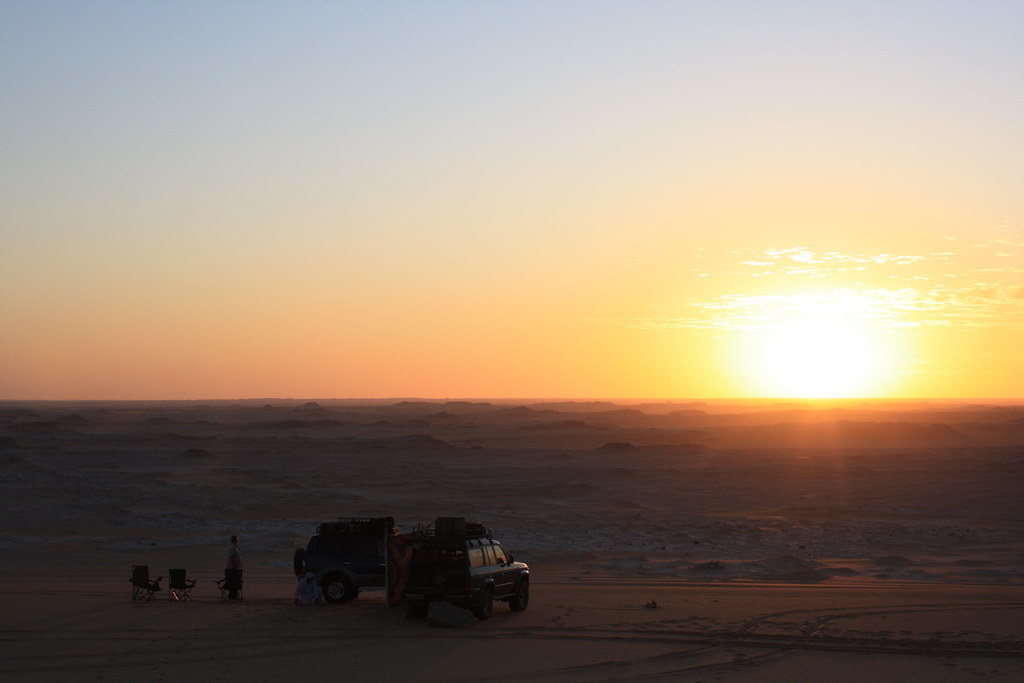
back from our desert trip with Willemijn & Menno. It was good fun but a little dusty as we had a sand storm.
26 November 2009
22 November 2009
Great Bitter Lake, Egypt

The Great Bitter Lake is one of several lakes located along the Suez Canal, which connects the eastern Mediterranean and Red Seas. As the canal is built only to allow ships to travel in a single lane, the Great Bitter Lake is a location where ships can change their position in line (like the passing lane on the highway) before proceeding to either Port Said to the north, or the port of Suez to the south. The lake also provides an intermediate harbor for ships traversing the Canal—a journey that typically takes 14 hours end to end. Several ships, some under power and some anchored, are visible at image right.
Great Bitter Lake, Egypt
10 November 2009
30 October 2009
Map of Our Siwa Trip
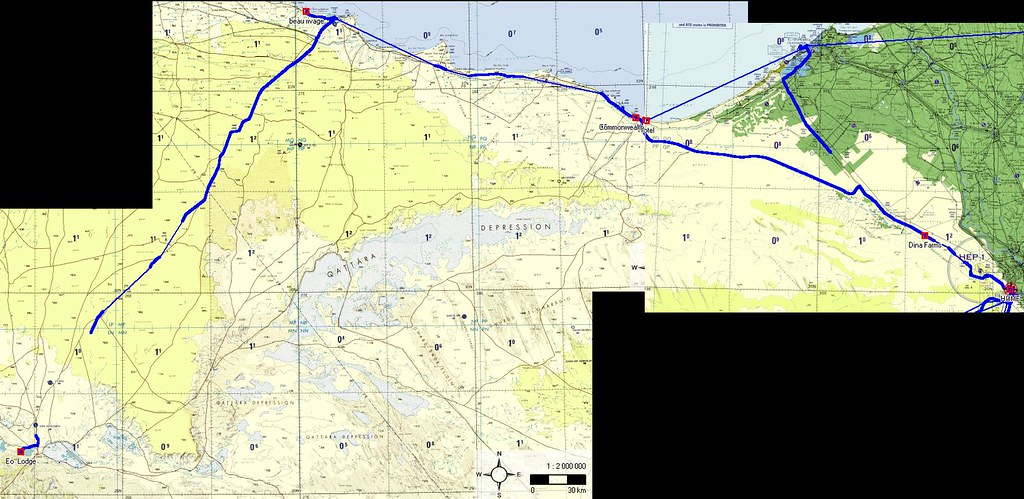
The road route to Siwa. I cut and paste 3 screen shots from Fugawi to make this map. Not the best work, but still.

27 October 2009
Over the Pyramids

A C-17 Globemaster III flies over the Pyramids of Giza Oct. 15, 2009, during Exercise Bright Star.
23 October 2009
We Are Back

from Alexandria/El Alamein/Siwa and it was a nice trip. As usual we got lost every five minutes but that's always part of the fun for us, we see places that aren't on the tourist map. And it looks like a big twuck hit the Down Twon sign, a few times. You have to love this place.
08 October 2009

06 October 2009
BBC News: Egypt cleric 'to ban full veils'
Egypt's highest Muslim authority has said he will issue a religious edict against the growing trend for full women's veils, known as the niqab. Sheikh Mohamed Tantawi, dean of al-Azhar university, called full-face veiling a custom that has nothing to do with the Islamic faith. Although most Muslim women in Egypt wear the Islamic headscarf, increasing numbers are adopting the niqab as well. The practice is widely associated with more radical trends of Islam. The niqab question reportedly arose when Sheikh Tantawi was visiting a girls' school in Cairo at the weekend and asked one of the students to remove her niqab. The Egyptian newspaper al-Masri al-Yom quoted him expressing surprise at the girl's attire and telling her it was merely a tradition, with no connection to religion or the Koran. | |

15 September 2009
07 September 2009
Quote
Her virtue was that she said what she thought, her vice that what she thought didn't amount to much.
- Peter Ustinov
- Peter Ustinov
31 August 2009
Strategypage.com: Why Iraqis Still Fight Like Arabs
Iraqi troops are somewhat mystified that they are not as successful at dealing with roadside bombs, as they Americans. The Iraqis now have the same equipment, and training, yet the Americans were much more successful at finding bombs and keeping roads clear of them. The Iraqis asked their American mentors for help, and were given some bad news (along with the requested help.)
The bad news was that the Iraqis were the victims of their own bad habits. The first thing the Americans noted was that the Iraqis were not sharing information on what the terrorists were up to. Bomb removal teams from the army or police operated as if the other did not exist, even if they patrolled the same roads. Different intel organizations in the police and military would not share information, or work together. This, and a lot of other bad habits are fairly common throughout the Arab world, even though U.S. advisors have been pointing out the downside of these traits for decades.
For example;
# Most Arab countries are a patchwork of different tribes and groups, and Arab leaders survive by playing one group off against another. Loyalty is to one's group, not the nation. Most countries are dominated by a single group that is usually a minority (Bedouins in Jordan, Alawites in Syria, Sunnis in Iraq, Nejdis in Saudi Arabia). All of which means that officers are assigned not by merit but by loyalty and tribal affiliation. This continues in democratic Iraq, where political parties or powerful politicians strive to control individual police or army units.
# Islamic schools favor rote memorization, especially of scripture. Most Islamic scholars are hostile to the concept of interpreting the Koran (considered the word of God as given to His prophet Mohammed). This has resulted in looking down on Western troops that will look something up that they don't know. Arabs prefer to fake it, and pretend it's all in their head. Improvisation and innovation is generally discouraged. Arab armies go by the book, Western armies rewrite the book and thus usually win. Despite years of American advice on this matter, many Iraqi police and military personnel stick with the old, less effective, traditions.
# There is no real NCO corps. Officers and enlisted troops are treated like two different social castes and there is no effort to bridge the gap using career NCOs. Enlisted personnel are treated harshly. Training accidents that would end the careers of US officers are commonplace in Arab armies, and nobody cares. This is slowly changing, with the steady growth of a proper NCO corps and better officer attitudes towards their troops. But the old ways often return, with disastrous effects on troop morale and effectiveness.
# Officers are despised by their troops, and this does not bother the officers much at all. Many Arab officers simply cannot understand how treating the troops decently will make them better soldiers. This is another old tradition that dies hard.
# Paranoia prevents adequate training. Arab tyrants insist that their military units have little contact with each other, thus insuring that no general can became powerful enough to overthrow them. Units are purposely kept from working together or training on a large scale. Arab generals don't have as broad a knowledge of their armed forces as do their Western counterparts. Promotions are based more on political reliability than combat proficiency. Arab leaders prefer to be feared, rather than respected, by their soldiers. This approach leads to poorly trained armies and low morale. A few rousing speeches about "Moslem brotherhood" before a war starts does little to repair the damage. This still exists in Iraq, particularly when it comes to Kurdish, Sunni Arab and Shia police or army units. More Iraqi officers now know that the paranoia and parochialism are bad, but ancient traditions are hard to abandon.
# Arab officers often do not trust each other. While an American infantry officer can be reasonably confident that the artillery officers will conduct their bombardment on time and on target, Arab infantry officers seriously doubt that their artillery will do its job on time or on target. This is a fatal attitude in combat. It's been difficult getting Iraqi officers to change when it comes to trust.
# Arab military leaders consider it acceptable to lie to subordinates and allies in order to further their personal agenda. This had catastrophic consequences during all of the Arab-Israeli wars and continues to make peace difficult between Israelis and Palestinians. When called out on this behavior, Arabs will assert that they were "misunderstood." This is still going on.
# While American officers and NCOs are only too happy to impart their wisdom and skill to others (teaching is the ultimate expression of prestige), Arab officers try to keep any technical information and manuals secret. To Arabs, the value and prestige of an individual is based not on what he can teach, but on what he knows that no one else knows. Still around, despite years of American advisors patiently explaining why this is counterproductive.
# While American officers thrive on competition among themselves, Arab officers avoid this as the loser would be humiliated. Better for everyone to fail together than for competition to be allowed, even if it eventually benefits everyone. Still a factor.
# Americans are taught leadership and technology; Arab officers are taught only technology. Leadership is given little attention as officers are assumed to know this by virtue of their social status as officers. The new generation of Iraqi officers and NCOs have been taught leadership, but for too many of them, this is an alien concept that they do not understand or really know what to do with.
# Initiative is considered a dangerous trait. So subordinates prefer to fail rather than make an independent decision. Battles are micromanaged by senior generals, who prefer to suffer defeat rather than lose control of their subordinates. Even worse, an Arab officer will not tell a US ally why he cannot make the decision (or even that he cannot make it), leaving US officers angry and frustrated because the Arabs won't make a decision. The Arab officers simply will not admit that they do not have that authority. The new generation of army commanders and staff officers have been sent to Western staff and command schools, but there's still not a lot of enthusiasm for initiative (which is seen as a decadent and dangerous Western import.)
# Lack of initiative makes it difficult for Arab armies to maintain modern weapons. Complex modern weapons require on the spot maintenance, and that means delegating authority, information, and tools. Arab armies avoid doing this and prefer to use easier to control central repair shops. This makes the timely maintenance of weapons difficult. Still a problem in Iraq, and throughout the Middle East.
# Security is maniacal. Everything even vaguely military is top secret. While US Army promotion lists are routinely published, this rarely happens in Arab armies. Officers are suddenly transferred without warning to keep them from forging alliances or networks. Any team spirit among officers is discouraged. Remains a problem.
# All these traits were reinforced, from the 1950s to the 1990s, by Soviet advisors. To the Russians, anything military was secret, enlisted personnel were scum, there was no functional NCO system, and everyone was paranoid about everyone else. These were not "communist" traits, but Russian customs that had existed for centuries and were adopted by the communists to make their dictatorship more secure from rebellion. Arab dictators avidly accepted this kind of advice, but are still concerned about how rapidly the communist dictatorships all came tumbling down between 1989-91. The Russian influence is still fondly remembered, because the Russians had developed some highly effective police state methods. This made it easier for the police and military to control a country, even if despicable methods were used.
While these Russian techniques can work to hunt down terrorists in a police state, it doesn't work in a democracy. The Iraqi government is passing laws to make the country more like a police state. Old habits die hard.
24 August 2009
'Silver' Anniversary
I was posted to Colombo 25 years ago today. Even subtracting the months I was in the US after I got out of the Marines and the weeks I spent there between contracts, I've still live longer outside the states than in. It just feels a bit weird is all.
19 August 2009
Global Voices: What's good for the goose is NOT good for the gander
I shamelessly lifted this from Global Voices:
by Marwa Rakha
When Marwa El Sherbini was shot dead in a German court Facebook users and the Egyptian blogosphere mourned her as the victim of the veil, the victim of racism, and the victim of her beliefs. But when a heap of bones wrapped up in a blanket named Ibrahim El Sayed Ibrahim was shipped back to Egypt from Libya - no one lifted a finger in his defense.
Ahmad El Badawy was among the first few to report the incident on his blog and on Facebook ; quoting Al Masry Al Youm Newspaper, Ahmad tells us his story:
فى شهر نوفمبر الماضى، كان الشاب ابراهيم حديث بعض الصحف الليبية.. ابراهيم اسقط عصابة دولية فى قبضة السفارة المصرية والامن الليبى.. العصابة ارسل قائدها من لندن مليون يورو.. كانت فى طريقها الى «الغسيل» أو لـ «عملية ارهابية».. الصحف التى نشرت تفاصيل «السقوط» لقبت ابراهيم بـ «الفرعون المصرى الذى اسقط عصابة دولية».. لكن ما حدث بعد ايام من النشر كان قاسيا.. حضر اليه ضابطان من رجال البحث الجنائى فى ليبيا.. عاتباه لأنه أخبر سفارة بلاده بشأن العصابة ولم يخطر الأمن الليبى.. الضابطان اقتاداه الى قسم شرطة هناك..
وحطما عظامه كاملة لمدة يومين متتاليين.. ووضعاه داخل «كيس بلاستيك» من الحجم الكبير.. وألقيا به فى مزرعة وسط مكان خال من المارة والسكان.. ظناً انه مات او سيموت.. وبعد ساعات قادت اليه «المصادفة» صاحب المزرعة ليكتشف الواقعة وينقله إلى المستشفى ليظل به اسبوعا داخل العناية المركزة.
وحطما عظامه كاملة لمدة يومين متتاليين.. ووضعاه داخل «كيس بلاستيك» من الحجم الكبير.. وألقيا به فى مزرعة وسط مكان خال من المارة والسكان.. ظناً انه مات او سيموت.. وبعد ساعات قادت اليه «المصادفة» صاحب المزرعة ليكتشف الواقعة وينقله إلى المستشفى ليظل به اسبوعا داخل العناية المركزة.
Last November Ibrahim El Sayed Ibrahim was allover Libyan newspapers when he reported a money laundering operation to the Egyptian Embassy; he was hailed as the Egyptian hero who busted an international gang. Two Libyan officers summoned him to the station, blamed him for reporting the gang to the Egyptian embassy not to the Libyan police, broke every single bone in his body, dumped him in a field, and left him to die. Divine intervention saved him when the owner of the farm found him and took him to the hospital; he stayed in the intensive care unit for a week.
Accustomed to the failing reaction of the Egyptian system, Ahmad said
النظام المصرى الحقير ما اتحركش كالعادة عشان يرجع حق الشاب المصرى اللى ضيعته ليبيا … للأسف ده مش خبر جديد و من كتر تكراره جتتنا نحست و اتعودنا عليه
As usual, not a finger was raised to avenge the poor Egyptian
What really enraged him was the contrast between how Islamists reacted to Marwa El Sherbini's assault in Germany and Ibrahim El Sayed Ibrahim's assault in Libya
الأخوة اللى قلبوا الدنيا عشان يستغلوا موت الشهيدة مروة الشربينى شهيدة العنصرية و يخلوها شهيدة الطرحة عشان يروجوا لنفسهم و لعنصريتهم و يحولوا الموضوع من حادث فردى ارتكبه شخص عاطل عنصرى ( ما يختلفش كتير فى صفاته عن صفات العنصريين بدقون عندنا ) لجريمة بيطالبوا بمعاقبة ألمانيا كلها عليها ما فتحوش بقهم فى القصة دى بربع كلمة
The “brothers” who raised hell over Marwa's death and politicized it to serve their personal interests by turning her into a victim of her scarf; the “brothers” who used an individual incident by some racist lowlife, who is not any different from our very own bearded racists, to promote their own agendas - those same “brothers” did not open their mouths when it came to Ibrahim's story.
Ahmad elaborates on his point saying
أخواننا الاسلاميين و القومجية لغرض فى نفس يعقوب اعتبروا اللى حصل ده حرب ألمانية على الاسلام و على قيمنا و اذلال للمصريين
دلوقتى لما جريمة تعذيب بشعة تحصل عن طريق رجال الأمن الليبى - اللى هما ممثلين الدولة - و فى مكان احتجاز تابع للدولة و لمدة طويلة و يبقى القصد منها الانتقام و القتل و لما الراجل يرجع مصر كومة لحم مفروم و غالبا حيعيش حياته كلها عاجز و بسبب ايييه ؟ لما كل ده يحصل … هل حتخرج مظاهرات اسلامية بالألوف بتطالب بمعاقبة ليبيا زى ما خرجت مظاهرات بتطالب بمعاقبة ألمانيا ؟
هل حد حيطالب بالاعدام للضباط اللى عذبوا ابراهيم أو حتى حد حيطالب بتسليمه لمصر زى ما طالبنا بتسليم المجرم الألمانى ؟
هل حد من قطيع المليون واحد اللى عملوا جروبات لشهيدة الحجاب حيسمع أصلا عن الموضوع ده ؟
هل حد حيفتح بقه عن الماضى و الحاضر العنصرى ضد المصريين و ضد الأقليات فى الدول العربية ؟
عرفتوا فين الازدواجية ولا لسة ؟
عرفتوا مين اللى بيكيل يميت مكيال و بيتهم غيره بكدة عشان يبرأ نفسه ؟
دلوقتى لما جريمة تعذيب بشعة تحصل عن طريق رجال الأمن الليبى - اللى هما ممثلين الدولة - و فى مكان احتجاز تابع للدولة و لمدة طويلة و يبقى القصد منها الانتقام و القتل و لما الراجل يرجع مصر كومة لحم مفروم و غالبا حيعيش حياته كلها عاجز و بسبب ايييه ؟ لما كل ده يحصل … هل حتخرج مظاهرات اسلامية بالألوف بتطالب بمعاقبة ليبيا زى ما خرجت مظاهرات بتطالب بمعاقبة ألمانيا ؟
هل حد حيطالب بالاعدام للضباط اللى عذبوا ابراهيم أو حتى حد حيطالب بتسليمه لمصر زى ما طالبنا بتسليم المجرم الألمانى ؟
هل حد من قطيع المليون واحد اللى عملوا جروبات لشهيدة الحجاب حيسمع أصلا عن الموضوع ده ؟
هل حد حيفتح بقه عن الماضى و الحاضر العنصرى ضد المصريين و ضد الأقليات فى الدول العربية ؟
عرفتوا فين الازدواجية ولا لسة ؟
عرفتوا مين اللى بيكيل يميت مكيال و بيتهم غيره بكدة عشان يبرأ نفسه ؟
The “brothers” and the “nationalists” promoted Marwa's assault as Germany's war on Islam and an insult to the Egyptians. But now when an Egyptian simpleton is tortured by the hands of a Libyan officer - a government representative - in an official police station for a prolonged period of time with the intention of torture and homicide, and when the guy is shipped back in a pile to spend the rest of his life incapacitated - when all of that happens, will we see thousands of Islamists demonstrating in his defense? Will any one demand that the Libyan officers be hanged the same way they called for the hanging of the German racist? Will anyone create a facebook group for him? Will anyone dare talk about cases of discrimination against Egyptians in Arab countries?
Do you now know the meaning of hypocrisy and double standards? Do you now know what's good for the goose is not good for the gander?
Link
Do you now know the meaning of hypocrisy and double standards? Do you now know what's good for the goose is not good for the gander?
Link
18 August 2009
We are
back from Holland. Doortje managed to get a few days off so we scampered off as fast as we could book tickets. It was a nice break, good food and we got to see much of the family but the weather sucked, we had just one day of rain. The rest of the time it was warm and sunny, I was disappointed to be honest.
12 August 2009
Astronomy Picture of the Day
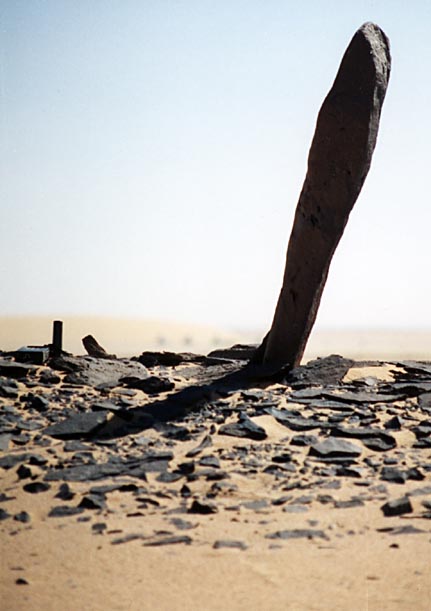
Credit: J. M. Malville (U. Colorado) & F. Wendorf (SMU) et al.
Explanation: In the Sahara Desert in Egypt lie the oldest known astronomically aligned stones in the world: Nabta. Over one thousand years before the creation of Stonehenge, local herders built a stone circle and other structures on the shoreline of a lake that has long since dried up. Over 6000 years ago, stone slabs three meters high were dragged over a kilometer to create the site. Shown above is one of the stones that remains. Little is known about the ultimate purpose of Nabta and the nature of the people who built it.
Link07 August 2009
It Is Now: 12:34:56, 07/08/09
Except in Belize, the Federated States of Micronesia, Palau and the United States where it is 12:34:56, 08/07/09.
31 July 2009
Pirate Bay website banned in Netherlands
THE HAGUE — A Dutch court on Thursday temporarily banned Swedish filesharing website The Pirate Bay from operating in the Netherlands by granting an application brought by a copyright lobby group.
A judge ordered three owners of the site to "cease infringing the copyright of the members" of Stichting Brein, a trade association which represents the Dutch recording industry. It had brought an urgent application for the ban at the district court in Amsterdam.
For every day the ruling is ignored, the owners will be fined 30,000 euros (42,000 dollars) up to a maximum of three million euros, said a judgment published by the court.
28 July 2009

25 July 2009
DutchAmsterdam.nl - Amsterdam craze: tossing Smart cars into the canals
Amsterdam, July 25, 2009 [DutchAmsterdam.nl] — Amsterdam police is deeply concerned about a new craze in which vandals toss parked cars from the Smart brand into the city’s canals.
The so-called ‘Smart tossing’ takes place mainly during the weekend, when many youths are out for a night on the town.
According to locally-published newspaper De Telegraaf police has not wanted to publicize this form of vandalism for fear of copy-cat incidents. However, police officers are paying extra attention to Amsterdam’s canals, especially during the weekends.
The Smart cars are small enough to be parked with head or tail pointing to the water.
One man who parked his Smart car that way said police woken him with the message that his car had been pushed into the canal.
“Several weeks ago the same thing happened to my companion’s Smart,” Casper de Jong said. “In both cases the Smart was declared a total-loss.”
Alongside most canals a low guard rail helps prevent cars from taking a dip, but the Smart car is small enough to be lifted and tossed.
It is not clear how many Smart cars have been vandalized this way, but an employee of Smart Center Amsterdam confirmed the company has recently been confronted with it ‘a number of times.’
Car Tipping
In recent years vandals have also targeted other small vehicles, including scootmobiles and tiny cars from the Canta brand — both used primarily by people with handicaps and limited mobility.
In an urban version of cow tipping, yobs apparently derive fun from tipping over these types of vehicles.
21 July 2009
FP - The List: The Middle East's Most Powerful Spooks
In a region known for cutthroat espionage, these five intelligence chiefs have leveraged their skills and connections to gain influence far above their pay grades.

Position: Director of Egypt's General Intelligence Service
Career: The archetypical Arab intelligence chief, Omar Suleiman has risen from anonymous government apparatchik to serious candidate for the Egyptian presidency in less than a decade. Dubbed "one of the world's most powerful spy chiefs" by London's Daily Telegraph, Suleiman was born in 1935 in a poverty-stricken fundamentalist stronghold in southern Egypt. Choosing the military as his profession, he excelled academically, collecting degrees in Egypt and abroad and earning a transfer to military intelligence. His selection as director of Egypt's intelligence service in 1993 came just as the regime was reeling from extremist attacks against tourist sites and other critical infrastructure.
In 1995, he famously insisted that President Hosni Mubarak's armored Mercedes be flown to Ethiopia for a state visit; The car saved the Egyptian leader's life during an assassination attempt the next day. In response to the attack, Suleiman helped dismantle Mubarak's Islamist opponents, a campaign that earned him a reputation for ruthlessness. Following the September 11, 2001, terrorist attacks, Suleiman's experience with combating Islamist terrorists has made him a favorite of Western intelligence services hungry for insights into al Qaeda and affiliated organizations.
Influence: More than from any other single factor, Suleiman's influence stems from his unswerving loyalty to Mubarak. Of Suleiman's allegiance, a former senior Israeli intelligence officer told Haaretz, "His primary task, perhaps his only one, is to defend the regime and protect the life of the president." In a sign of presidential gratitude, Egypt's secret warrior has also recently served as its diplomatic face, traveling throughout the region as Mubarak's personal emissary. This charge includes working as a mediator during ongoing Israeli and Palestinian negotiations and as Cairo's interlocutor to dozens of Palestinian groups, including Hamas. Whether this unofficial promotion is a trial run for a Suleiman presidency remains to be seen.
Link15 July 2009
BBC News: Egyptian jailed for insult poem
A civil servant in Egypt has been jailed for three years for insulting President Hosni Mubarak in a poem, according to newspaper reports.
Moneer Said Hanna's family said he wrote satirical poetry for fun, to entertain his work colleagues, and never meant to hurt anyone.
The case was largely unknown until the family asked a newspaper to publish an appeal for clemency.
The Arab Network for Human Rights says it will appeal against the sentence.
It says Mr Hanna, who worked as a civil servant in a small town in upper Egypt, was tried without being given access to a lawyer.
Under Egyptian law, insulting the president can land the offender in jail for up to three years.
Subscribe to:
Comments (Atom)


